


Italy’s MEM (Mechanical, Electrical, and Metalworking) sector is a world-class showcase of manufacturing skill, engineering creativity, and flexible production. For Swiss companies operating in advanced industries, understanding the Italian MEM landscape opens the door to a rich ecosystem of expertise, technologies, and collaborative opportunities.
Italy’s Leading Players in the MEM Industry
The Italian MEM sector is defined by major industrial groups with strong international reach, supported by a network of specialized companies. Leonardo S.p.A. leads the defense, aerospace, and security sectors, delivering advanced technologies and projects on a global scale.
Fincantieri remains one of the world’s foremost shipbuilders, producing both civilian and military vessels renowned for their quality and innovation.
In the automotive field, Stellantis – a global group born from the merger of Fiat Chrysler Automobiles and PSA – is active in vehicle production and advanced components. Its “Fabbrica Italia” plan aims to revitalize domestic manufacturing through investments in digitalization and sustainable processes. Meanwhile, Ferrari and Lamborghini continue to embody Italian excellence in luxury and high-performance vehicles, and Brembo stands out for braking systems exported worldwide.
These industrial powerhouses are complemented by other key players: Avio Aero, specialized in aircraft engines; MBDA Italia, active in missile systems and advanced defense; and Alstom Italia, a leader in the rail sector. In robotics and automation, Comau serves as a benchmark for Industry 4.0, whilst Elettric 80 Group S.p.A. develops cutting-edge solutions for automated logistics. In precision engineering, Savio Macchine Tessili leads with machinery employed across textiles and automotive sectors.
Alongside these major groups, Italy’s SMEs play a crucial role. Often family-run, they stand out for their innovation and agility in international markets. Together, these companies reinforce Italy’s position as a leading force in the MEM sector, combining industrial tradition, technical excellence, and a growing focus on sustainability.
Industrial Districts: Hubs of Excellence
Italy’s industrial landscape is defined by strong territorial specialization, with clusters that function as vibrant ecosystems of innovation. Each district has its own identity, often shaped by a collaborative mix of companies, universities, and research centers, making them hotbeds of technology and advanced manufacturing.
In Brianza, the precision mechanics district is renowned for producing specialized machinery and automotive components. Nestled between Lombardy and Liguria, it brings together SMEs, universities, and research centers, creating a permanent laboratory for high-tech MEM innovation.
Brescia represents another strategic hub, the beating heart of Italian metallurgy, known for steel, valves, and industrial fittings. Between Como and Lecco, the metalworking district is among Lombardy’s most dynamic, with hundreds of companies shaping steel and light alloys, all geared toward export and continuous innovation.
Bergamo’s Kilometro Rosso stands out as the region’s core of technological innovation. The campus integrates industrial research, higher education, and certified incubators, promoting projects in mechatronics, ICT, life sciences, and clean energy.
Parma hosts the robotics district, a center of excellence in industrial automation. Local companies specialize in precision mechanics, electronics, and collaborative robotics, combining intelligent technologies with Italy’s renowned craftsmanship. This cluster also hosts major fairs and events focused on Industry 4.0.
Turin is home to one of Europe’s largest mechanical and automotive districts. Long tied to the automotive industry, it houses Stellantis alongside a network of internationally recognized suppliers, making Turin the beating heart of sheet metal processing and industrial automation for automotive applications. Advanced infrastructure and leading universities, such as the Politecnics of Turin and nearby Milan, support the district’s competitiveness.
In the Veneto region, Treviso’s plastics district excels in advanced polymer processing. Companies operate across diverse sectors, from electronics to cosmetics, supported by a network of foundries, laboratories, and engineering centers stretching from Verona to Belluno, fostering high-tech solutions.
Friuli-Venezia Giulia hosts the COMET District, a core of the MEM sector. Composed mostly of family-run SMEs active in mechanics, automotive, and home appliances, COMET blends manufacturing tradition with technological innovation.
Further south, Campania emerges as a key MEM cluster. Beyond electronics and electromechanics, the region is home to the aerospace district, a national excellence. The Campania Aerospace Cluster unites companies, universities, and research centers to develop advanced technologies, from precision mechanics to electronic components, with a strong focus on innovation.
Networks and Technology Transfer
Beyond these core districts, Italy is dotted with regional clusters and technology hubs. These ecosystems foster applied research, technology transfer, and participation in European programs, creating continuous innovation in microelectronics, software, and advanced mechanics.
Trade Fairs: Showcasing Excellence
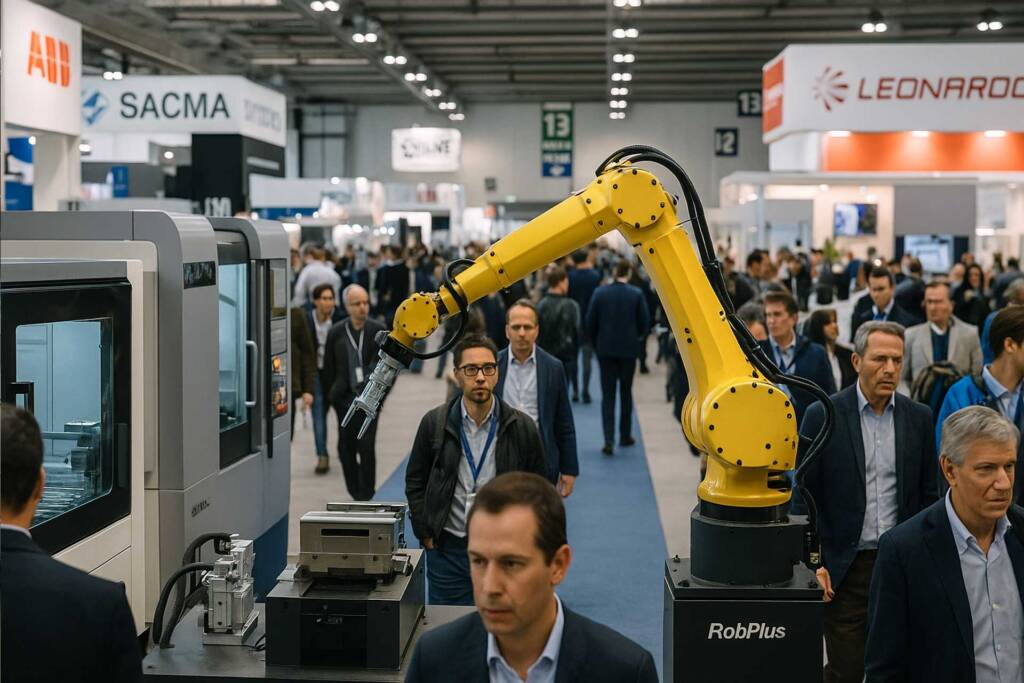
Specialized trade fairs remain a cornerstone for networking, market expansion, and international visibility, while also serving as a hub for exchanging ideas with global partners.
Among the most important events, EMO Milano stands out as a world-class gathering for precision engineering and machine tool manufacturers and buyers. Held every two years, the fair attracts exhibitors and visitors from across the globe, creating an ideal platform for industry dialogue and innovation.
In Pordenone, SamuExpo confirms its role as another key biennial stop, hosting four fairs simultaneously: SamuMetal for metalworking, SamuPlast for machinery and plastics, SubTech for metalworking subcontracting, and Fabbrica 5.0, focused on digitalization and Industry 4.0 technologies.
SPS Italia, held annually in Parma, is dedicated to industrial automation and robotics. Widely regarded as the benchmark for Industry 4.0, the fair gathers technologies and applications aimed at digitizing production processes, with a strong emphasis on efficiency and sustainability.
For the iron and metalworking sector, LAMIERA in Milan is the reference point. Each edition showcases the latest machinery, tools, and technologies for metal transformation, highlighting sustainability, low-impact solutions, and advanced systems to reduce waste and emissions.
MECSPE in Bologna ranks among Italy’s largest industrial fairs, covering a wide range of sectors – from 3D printing and robotics to precision mechanics and automation.
Finally, The Robot Exhibition and A&T (Automation & Technology), both held in Turin, focus specifically on advanced manufacturing technologies. These events are particularly relevant for companies operating in robotics and industrial automation, providing a firsthand look at the cutting edge of the field.
Conclusion
Italy’s MEM sector combines innovation, craftsmanship, and international collaboration. For Swiss companies, exploring Italian districts, trade fairs, and major players offers access to a market rich in expertise and technologies. The geographic and cultural proximity makes Italy a natural partner for productive, technological, and commercial synergies.


